Devon Roofing
Roofing contractors in Devon
Pitched roofs
The UK has the oldest housing stock in the world and even the best built houses need repairs. Slates, tiles and ridges work loose in the storms; chimneys leak. If small leaks go unnoticed for a while then the roof rafters and purlins can start to rot.
The roof itself may be sagging with old age or you might just decide you want a brand new roof with the latest design of tile. We are certainly the people to build you a new slate or tile roof that will last a lifetime, however, there are many ways to execute even major repairs without spending the earth.
Rafters can be selectively replaced or braced, the old sarking can be replaced with modern waterproof but vapour permeable membrane and the battens can be replaced with tanalised timber.
Slate has a longer life than tile, so it is often possible to carefully remove the existing slates and then re-fix them when the sarking and battens have been swapped. Damaged slates can be replaced with either selected reclaimed slates or new ones.
If you have concerns about your roof talk to us ASAP. A timely repair can save a lot of expense later.

New flat grey tiles installed on a bungalow near Tiverton
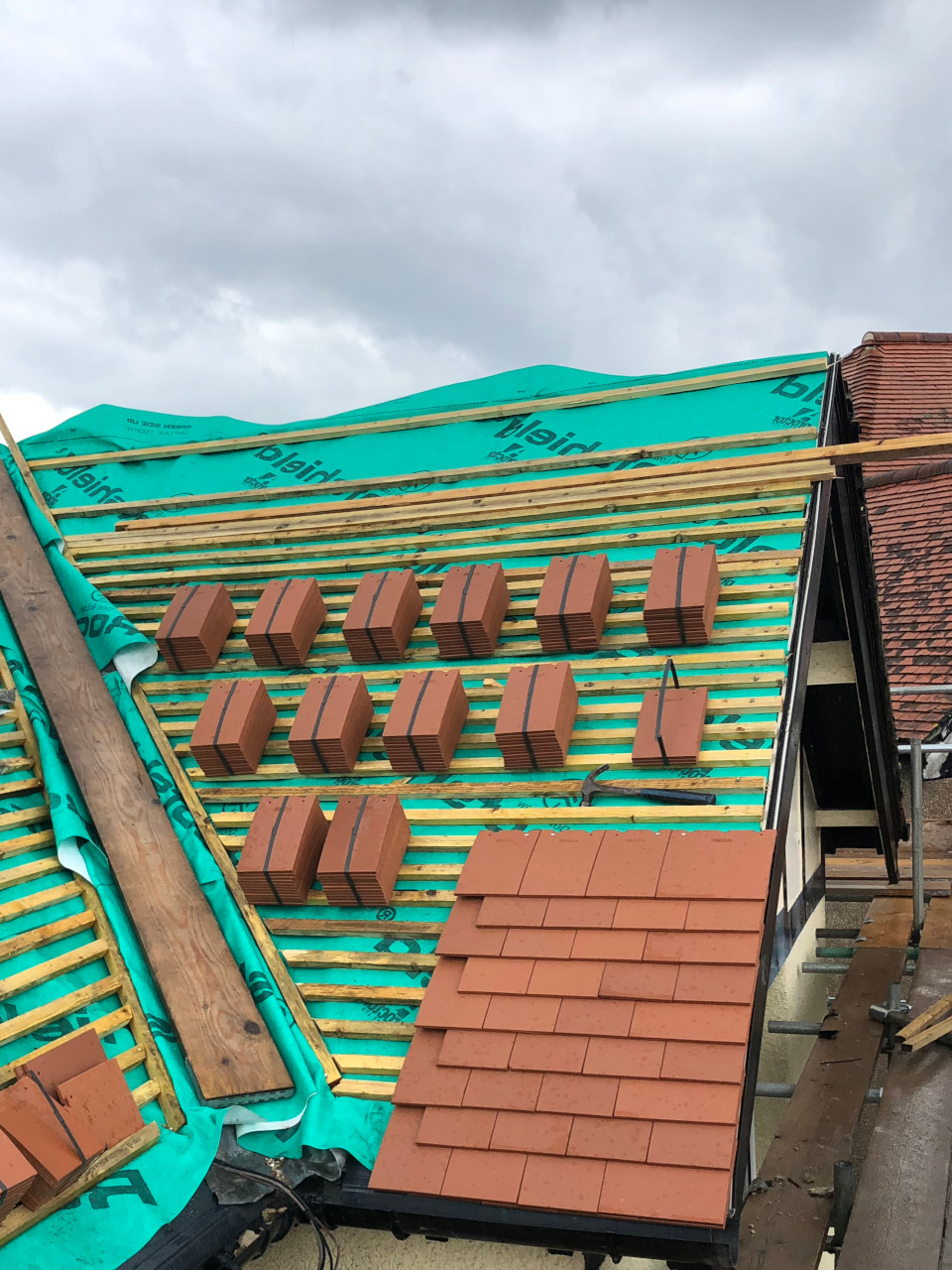
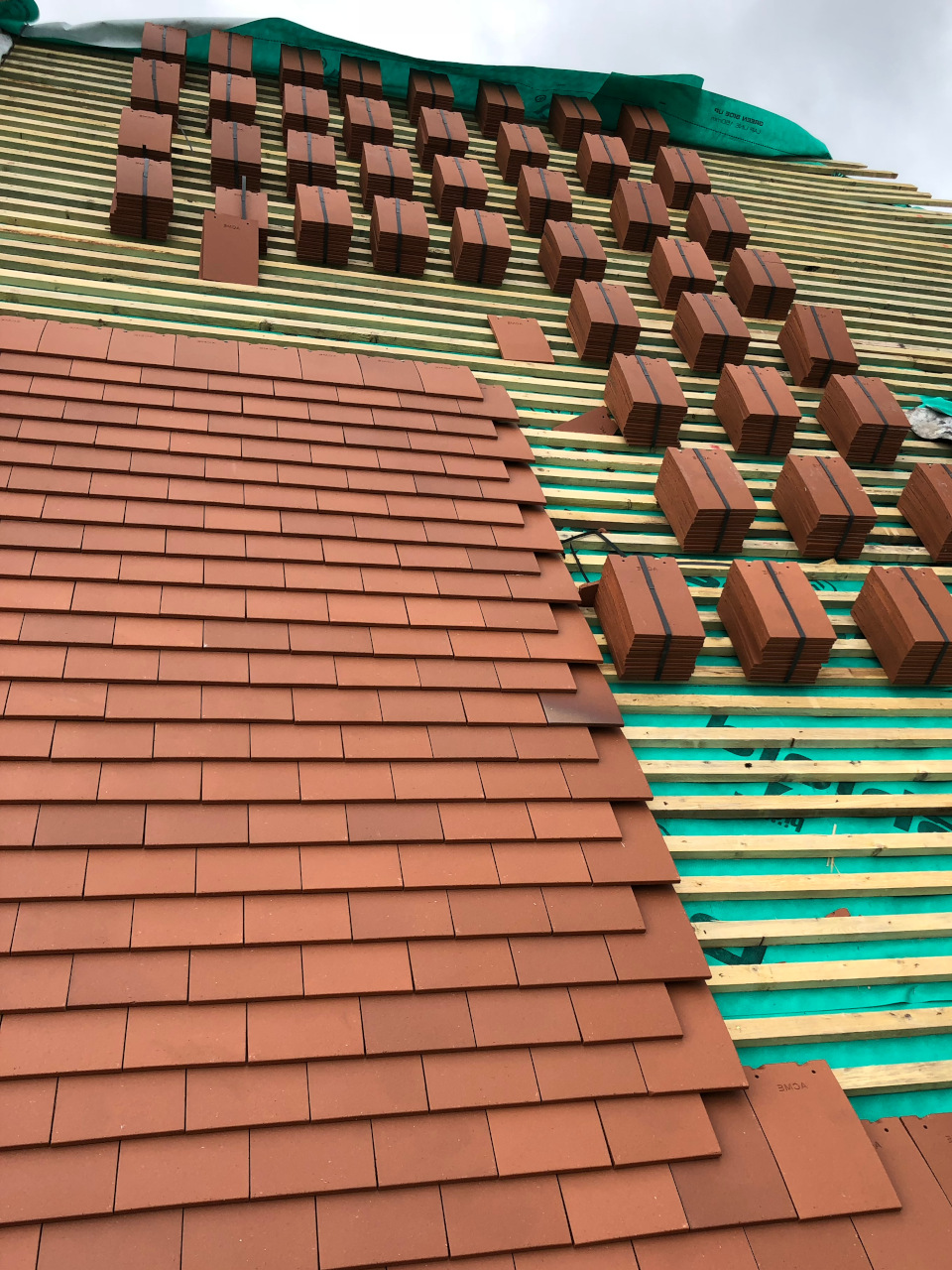
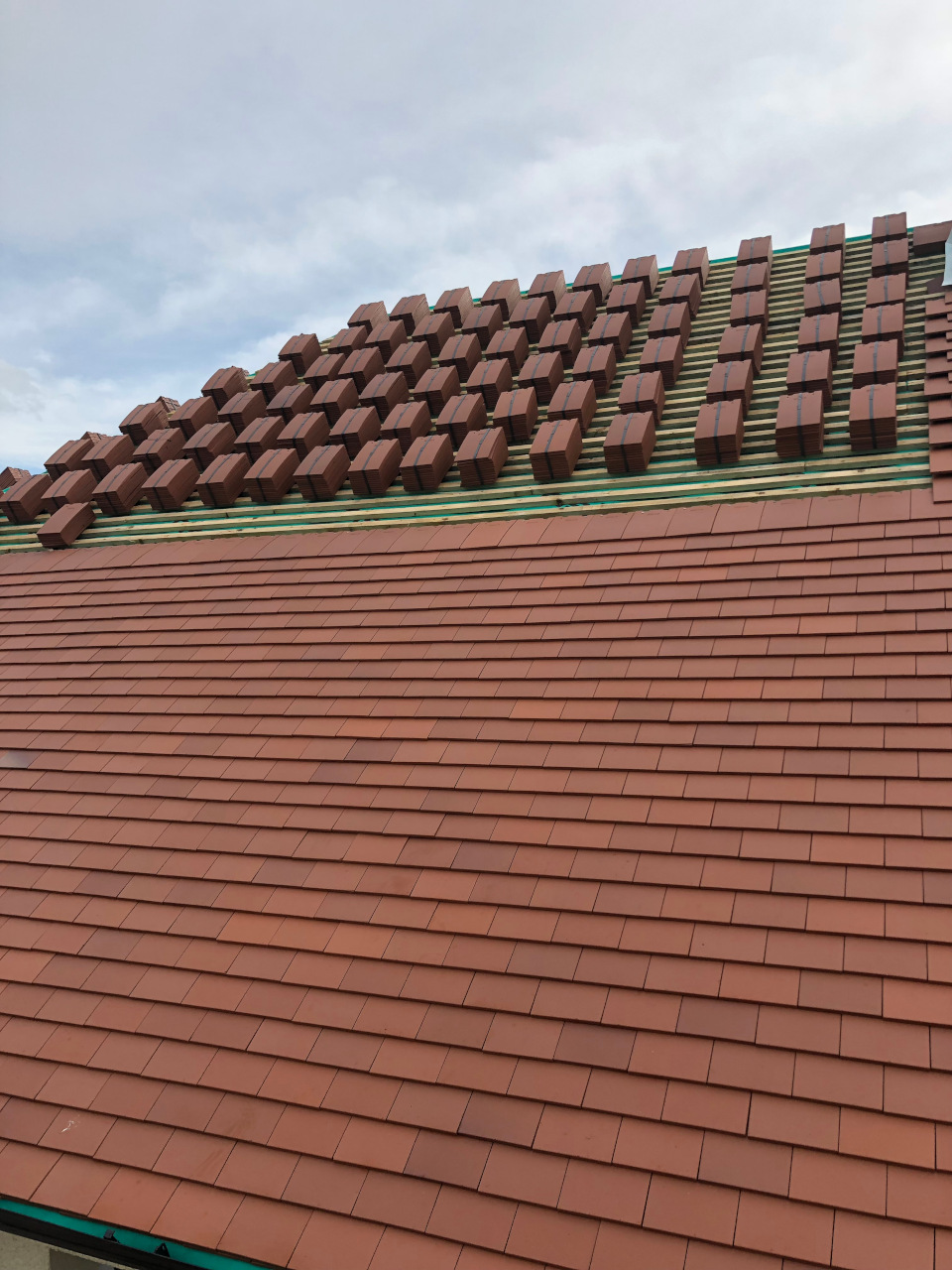
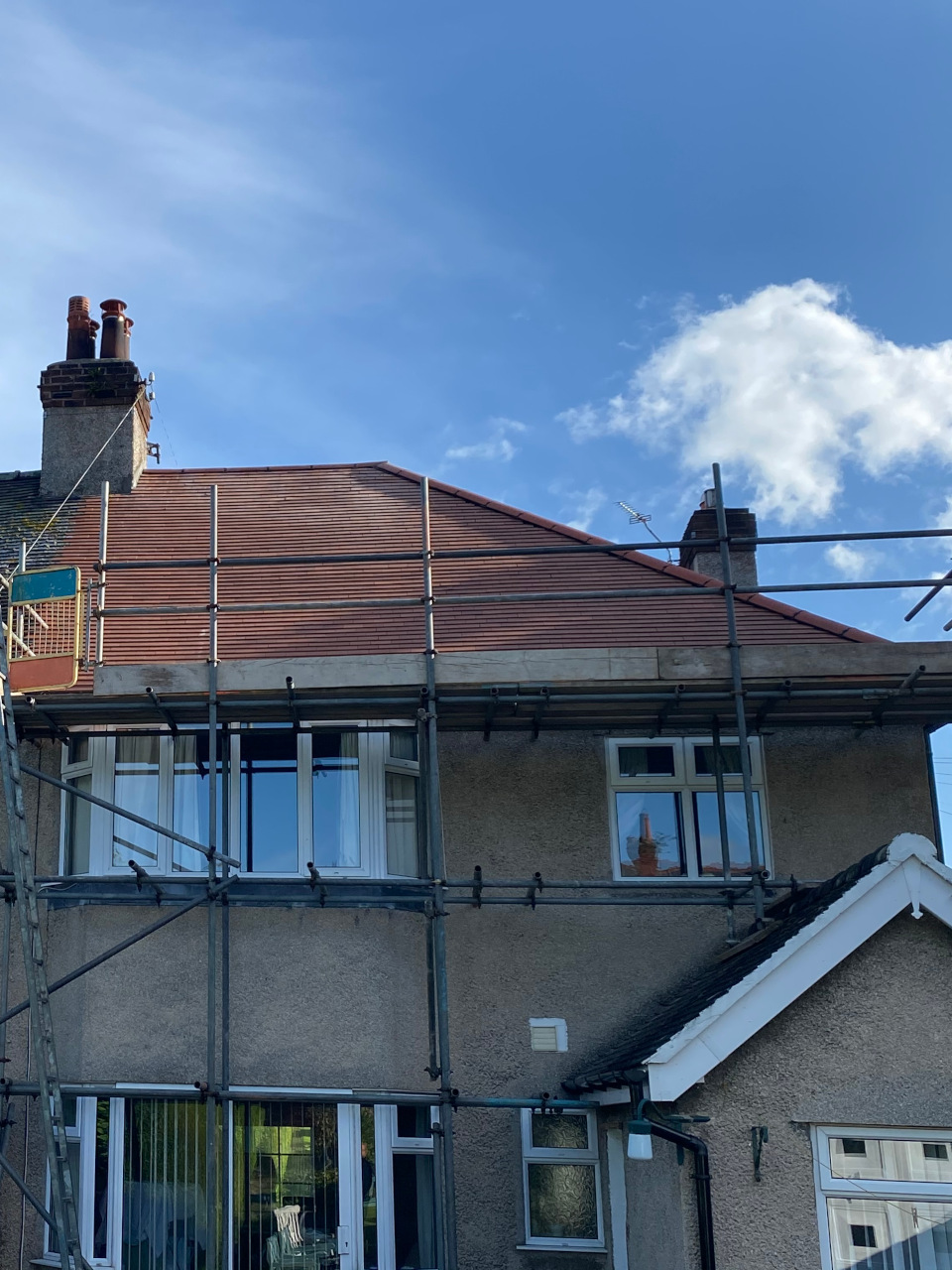
Process of installing new roof sarking and battens with red clay roof tiles
Flat roofs
We repair and carry out full flat roof installations.
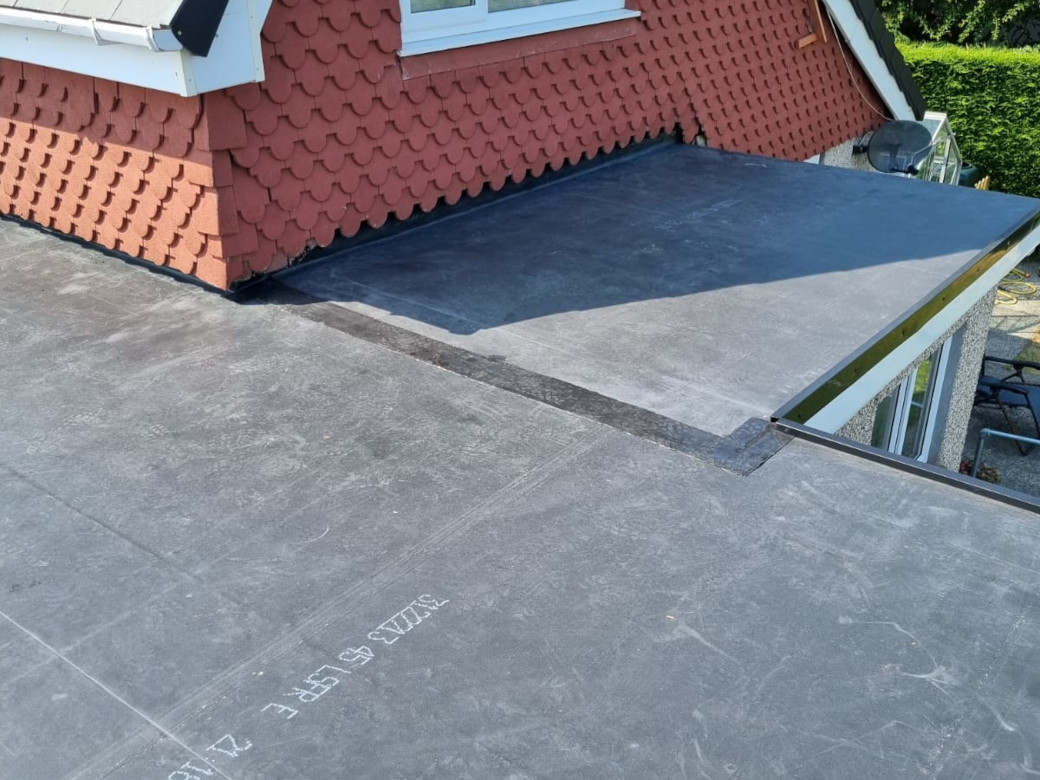
There are three main types of flat roof surfaces: EPDM rubber, torch-on felt and GRP (Glass Reinforced Polyester). These days EPDM rubber is the one most used. It has proven to be a resiliant roof covering and can usually be installed quicker than felt or GRP, so costs less. EPDM is available in widths up to 3 metres wide. This means on smaller roofs there are no joints.
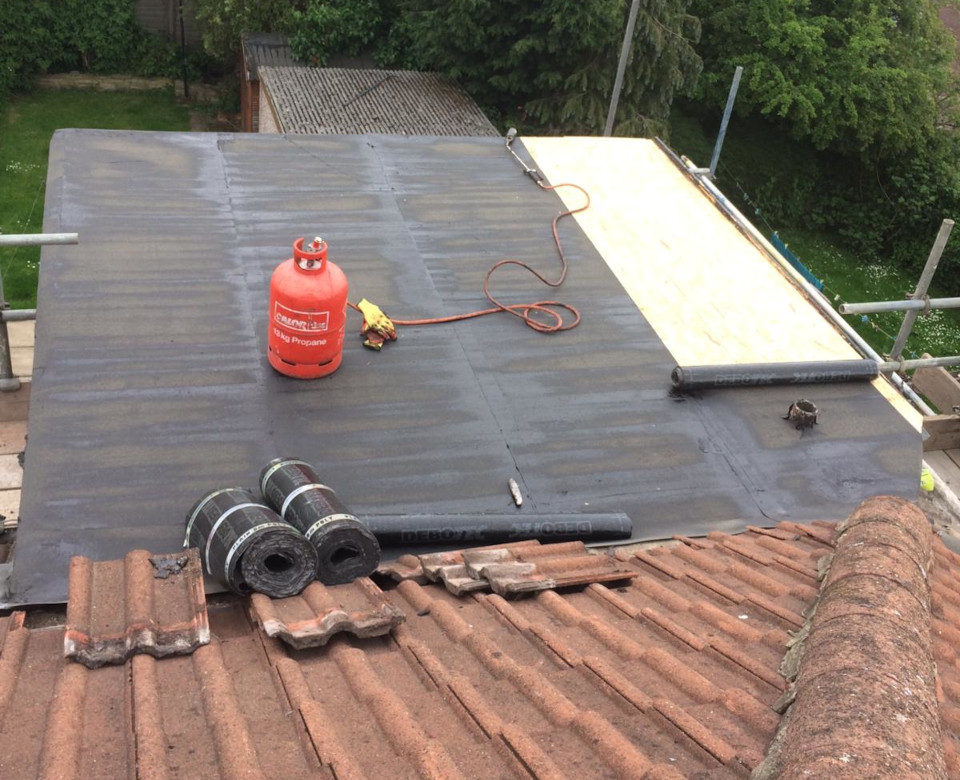
Torch-on felt is usually applied in two or three layers with the joints being staggered. The base layer is vapour permeable and the top layer is impregnated with mineral particles to make it more hardwearing and durable. These days felt is mainly used only when joining with an existing felt covered roof.
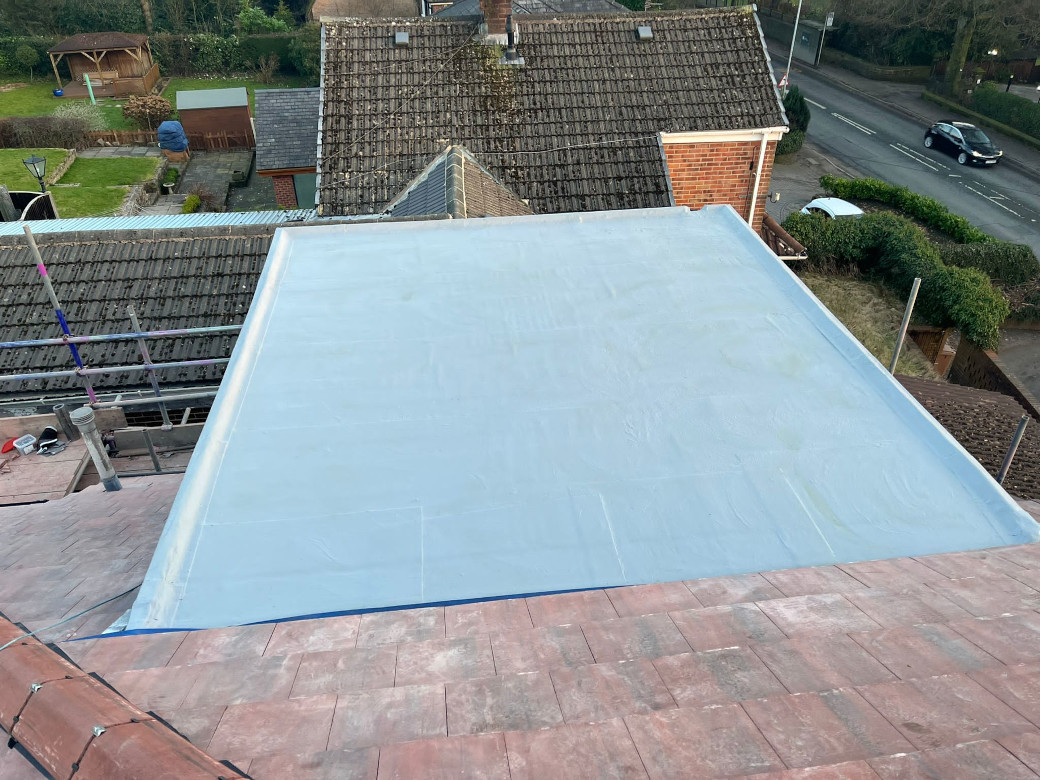
GRP is used on roofs with upstands, steps or protruding services. The polyester resin is first applied and then woven glassfibre mat is roller-compressed in to the resin. Before application a catalyst is mixed with the resin to bgin the cross-linking setting process. The resin and mat layers are repeated to build up the desired thickness. GRP, while wet, can be draped and moulded into three dimensional shapes ensuring complete coating without joints.
There are three main types of flat roof surfaces: EPDM rubber, torch-on felt and GRP (Glass Reinforced Polyester). These days EPDM rubber is the one most used. It has proven to be a resilant roof covering and can usually be installed quicker than felt or GRP, so costs less. EPDM is available in widths up to 3 metres wide. This means on smaller roofs there are no joints.
Torch-on felt is usually applied in two or three layers with the joints being staggered. The base layer is vapour permeable and the top layer is impregnated with mineral particles to make it more hardwearing and durable. These days felt is mainly used only when joining with an existing felt covered roof.
GRP is used on roofs with upstands, steps or protruding services. The polyester resin is first applied and then woven glassfibre mat is roller-compressed into the resin. Before application a catalyst is mixed with the resin to begin the cross-linking setting process. The resin and mat layers are repeated to build up the desired thickness. GRP, while wet, can be draped and moulded into three dimensional shapes ensuring complete coating without joints.